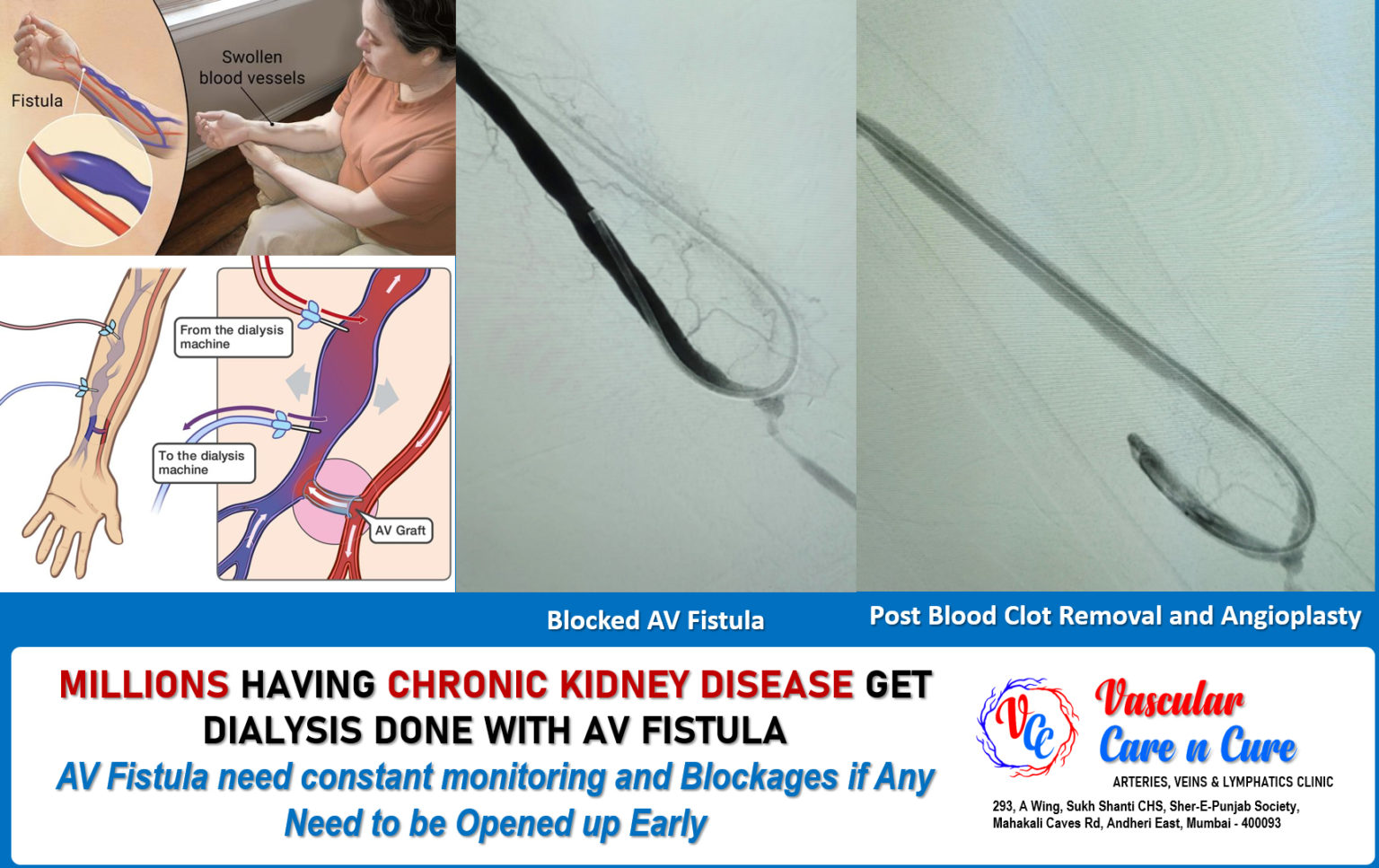
An arteriovenous (AV) fistula has proven to be the longest-lasting, safest way of gaining vascular access for dialysis.
Normally, blood flows from arteries into capillaries and then into veins. When an arteriovenous fistula is present, blood flows directly from an artery into a vein, bypassing the capillaries. An arteriovenous fistula for kidney dialysis connects a vein to an artery. This creates a long-lasting site for reaching the bloodstream during dialysis.
An AV fistula uses the patient’s own veins and arteries, with no artificial material. This lowers the risk of infection and complications.
However, blood clots or blockages can still occur in an AV fistula over time. Prompt restoration of flow and correction of any narrowing keep this lifeline for dialysis working.
How a surgeon creates an AV fistula
The operation joins an artery to a vein, usually at the wrist or the elbow of the arm you use less. It is a short procedure through a small cut, most often under local or regional anaesthesia. Many patients go home the same day. Before the operation, a Doppler ultrasound maps the arteries and veins of both arms. This helps the surgeon choose the best site.
How long does an AV fistula take to mature?
After the operation, the extra blood flow makes the vein wider and its wall thicker, so that it can take dialysis needles. Doctors call this maturation. It usually takes about 4 to 8 weeks, sometimes longer. Not every fistula matures on its own, and some need a small second procedure. For this reason the 2019 KDOQI vascular access guideline encourages planning dialysis access early, as part of each patient’s long-term life plan. That way a working access is ready when dialysis starts (Lok et al., 2020).
Why an AV fistula is better than a catheter
A permacath (tunnelled catheter) works the same day. However, it sits inside a large vein in the neck or chest. It carries a higher risk of infection and can narrow the central veins over time. A fistula uses your own vessels, leaves no plastic inside the body and usually lasts the longest. Our page on permacath vs AV fistula vs AV graft compares the three in detail.
Looking after your AV fistula
- Feel the buzz (thrill) over the fistula every morning and evening. If it stops or becomes weak, call your vascular surgeon or dialysis unit the same day.
- Do not let anyone check blood pressure, give injections or take blood from the fistula arm.
- Avoid tight sleeves, watches or bangles on that arm, and do not sleep on it.
- Keep the arm clean, and wash the skin before each dialysis session.
- If your surgeon advises it, squeeze a soft ball several times a day to help the fistula mature.
Get help urgently if the thrill disappears or a needle site keeps bleeding despite firm pressure. The same applies if the area turns red or discharges pus, or the hand becomes cold, blue or painful.
When a fistula stops working well
Over months and years a fistula can narrow. This happens most often near the join or along the stretch of vein used for needling. Warning signs are long bleeding after dialysis, poor flow on the machine, a swollen arm or a change in the thrill. A balloon passed through a needle puncture can usually open the narrowing (fistuloplasty). We can often clear a clot as well, so the same fistula keeps working.
Frequently asked questions
How long does an AV fistula last?
Many fistulas work for years, usually longer than a graft or a catheter. Regular checks and early treatment of any narrowing help them last longer.
Can I exercise with a fistula?
Yes. Normal daily activity is fine. Avoid lifting heavy weights with the fistula arm and anything that presses on it.
Does making a fistula hurt?
You receive anaesthesia for the operation, so it should not hurt. The arm may ache and swell for a few days afterwards, and simple painkillers usually help.
For planning or repairing dialysis access, call +91 77383 27001 or book an appointment with Dr. Aniruddha Bhuiyan at Vascular Care n Cure Clinic, Andheri East, Mumbai.
References
- Lok CE, Huber TS, Lee T, et al. KDOQI clinical practice guideline for vascular access: 2019 update. Am J Kidney Dis. 2020;75(4 Suppl 2):S1-S164. doi:10.1053/j.ajkd.2019.12.001
