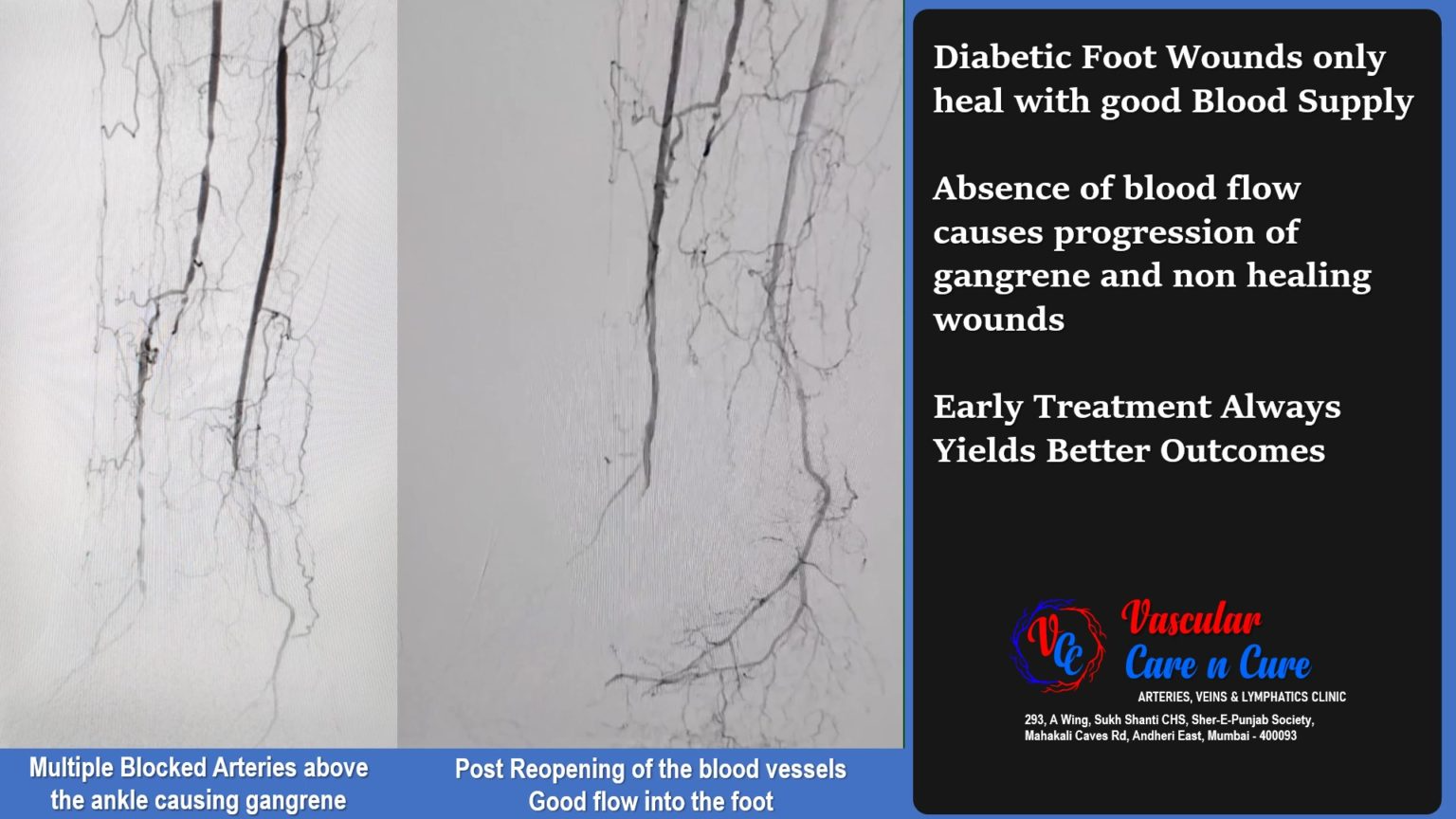
The angiosome concept comes from anatomy. Each area of the body gets its blood from its own vessels, so a blockage in one of those vessels can kill the tissue it supplies.
However, the body also has a wide network of collateral vessels that keeps blood flowing up to a point. Large wounds and extensive infection, especially in people with diabetes, need more blood to heal. That is why surgeons try to improve blood flow to the specific angiosome where the wound sits.
The issue with multiple cooks (specialists): when separate doctors handle blood supply, wound care and wound healing, many wounds end in major amputation after long follow-up. A vascular & endovascular surgeon can bridge this divide. He or she can restore blood flow by open or endovascular methods and also handle wound care and debridement. This helps the wound heal earlier, often avoiding major amputation or limb loss.
What is an angiosome?
The term comes from anatomical work by Taylor and Palmer, published in 1987. They injected dye into the arteries of cadavers and mapped them. This showed that the body divides into three-dimensional blocks of tissue, each fed by one main source artery. They named these blocks angiosomes.
The foot and ankle have six angiosomes, supplied by branches of three leg arteries. The anterior tibial artery feeds the top of the foot. The posterior tibial artery feeds the heel and the sole. The peroneal artery feeds the outer ankle and part of the heel.
Why the angiosome matters for a diabetic foot wound
A person with diabetes may have a foot wound and blocked leg arteries. The vascular surgeon then opens one or more arteries to bring blood to the wound, by angioplasty or by bypass surgery. The angiosome concept favours opening the artery that feeds the wound area itself. For a heel ulcer, that would be the posterior tibial artery. Surgeons call this direct revascularisation. Indirect revascularisation means opening a different artery and relying on collateral vessels to carry blood across.
A recent meta-analysis pooled nine studies of patients with chronic limb-threatening ischaemia. Direct revascularisation went with better wound healing and amputation-free survival than indirect revascularisation. Overall survival was also better. However, most of these studies did not randomise patients. Doctors still debate how much the angiosome matters when good collateral vessels are present. In practice, surgeons open the artery that feeds the wound when possible, and the best available artery when it is not.
Too many cooks: why coordinated care saves legs
A diabetic foot wound has four problems at the same time: blood supply, infection, the wound itself and blood sugar. When a different doctor in a different place handles each one, decisions take longer. The patient goes back and forth while the wound gets worse.
Studies support a coordinated approach. A systematic review of 33 studies found that 31 reported fewer major amputations after hospitals set up a multidisciplinary foot team. In a meta-analysis, organised care such as dedicated teams and clear care pathways went with about half as many major amputations.
Several specialists can work well together when one person leads and coordinates the care. A vascular & endovascular surgeon is well placed to take that role. He or she can restore blood flow by open surgery or angioplasty, clean the wound and plan its healing. The surgeon works alongside the diabetologist, the infection specialist and the podiatrist or orthotist.
Frequently asked questions
What is an angiosome in simple words?
A block of tissue, including skin, muscle and bone, that gets its blood mainly from one artery.
What is direct revascularisation?
Opening the artery that supplies the part of the foot where the wound is, so that blood reaches the wound directly instead of through collateral vessels.
For a non-healing foot wound or a second opinion before amputation, call +91 77383 27001 or book an appointment with Dr. Aniruddha Bhuiyan at Vascular Care n Cure Clinic, Andheri East, Mumbai.