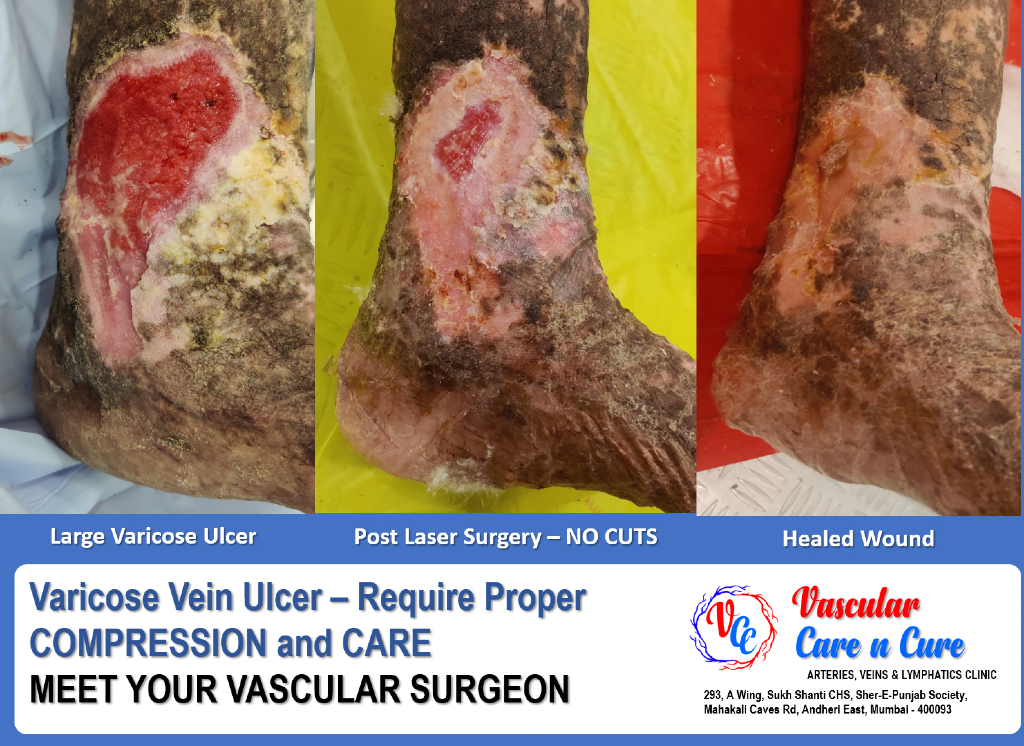
A varicose vein ulcer (venous leg ulcer) is an open wound on the lower leg, usually on the inner side just above the ankle. It forms because damaged veins let blood pool in the leg.
Why a varicose vein ulcer does not heal
The valves in the leg veins normally keep blood moving up towards the heart. When they fail, pressure in the veins stays high whenever you stand. The legs ache and feel tired. Over months the skin around the ankle swells, darkens, hardens and itches. Then a small knock or scratch can break down into an ulcer. Ointments and dressings alone rarely heal it, because they do not lower the pressure in the veins.
Weak veins can run in families, or follow a blood clot, an injury, ageing or obesity.
Varicose vein ulcer treatment
Treatment combines compression bandages or stockings, raising the leg when resting and regular dressings. The surgeon also closes the faulty vein with endovenous laser ablation, radiofrequency ablation, VenaSeal glue or sclerotherapy. The EVRA trial found that ulcers healed faster when surgeons treated the vein within two weeks rather than after the ulcer had healed.
Does compression alone heal the ulcer?
Compression is the foundation of treatment, and many ulcers heal with good compression and dressings alone. The trouble is what happens afterwards. In the ESCHAR trial of 500 patients, ulcers came back within four years in 56% of legs treated with compression alone, compared with 31% of legs that also had surgery to correct the faulty superficial veins. Treating the vein makes it much less likely that the ulcer will return.
How long does a venous ulcer take to heal?
It depends on the size and age of the ulcer and on how well the leg tolerates compression. In the EVRA trial, the median time to healing was 56 days when the vein was treated early, compared with 82 days when treatment was put off until later. Very large or long-standing ulcers can take several months.
Keeping a varicose vein ulcer from coming back
- Wear your compression stockings every day as advised, putting them on in the morning before the leg swells.
- Keep the skin moisturised, because dry, itchy skin cracks easily.
- Walk every day, since the calf muscle pumps blood out of the leg.
- Raise your legs when you sit for a long time.
- Get any new wound on the lower leg checked early.
If you are deciding between laser, radiofrequency and glue, our guide to choosing a varicose vein treatment explains the differences.
When to see a vascular surgeon
A wound on the lower leg that has not healed in two weeks, varicose veins with darkened skin, or a wound that turns red, hot or painful.
Frequently asked questions
Can a venous ulcer heal without surgery?
Yes, many heal with compression and dressings. Closing the faulty vein speeds up healing and makes the ulcer less likely to come back.
Is the vein procedure painful?
Laser, radiofrequency and glue are done through a needle puncture under local anaesthesia, and most people walk out the same day.
For a leg ulcer that is not healing, call +91 77383 27001 or book an appointment with Dr. Aniruddha Bhuiyan at Vascular Care n Cure Clinic, Andheri East, Mumbai.