Lymphovenous disorders affect the lymphatic system, the veins, or both. The lymphatic system is a network of vessels that drains extra fluid and waste from the tissues, and it also helps the body fight infection. The veins carry blood back to the heart. When either system fails, fluid builds up and causes swelling and other problems. Examples include lymphedema, deep vein thrombosis and chronic venous insufficiency.
In these conditions, fluid or blood collects in the tissues and a part of the body becomes abnormally enlarged. This can happen anywhere, but it affects the legs most often. There are many causes. Many patients receive only compression and reassurance. The condition can then go on to cause long-term disability.
A vascular surgeon finds the cause, treats it and, when needed, removes the excess tissue that keeps causing ulcers.
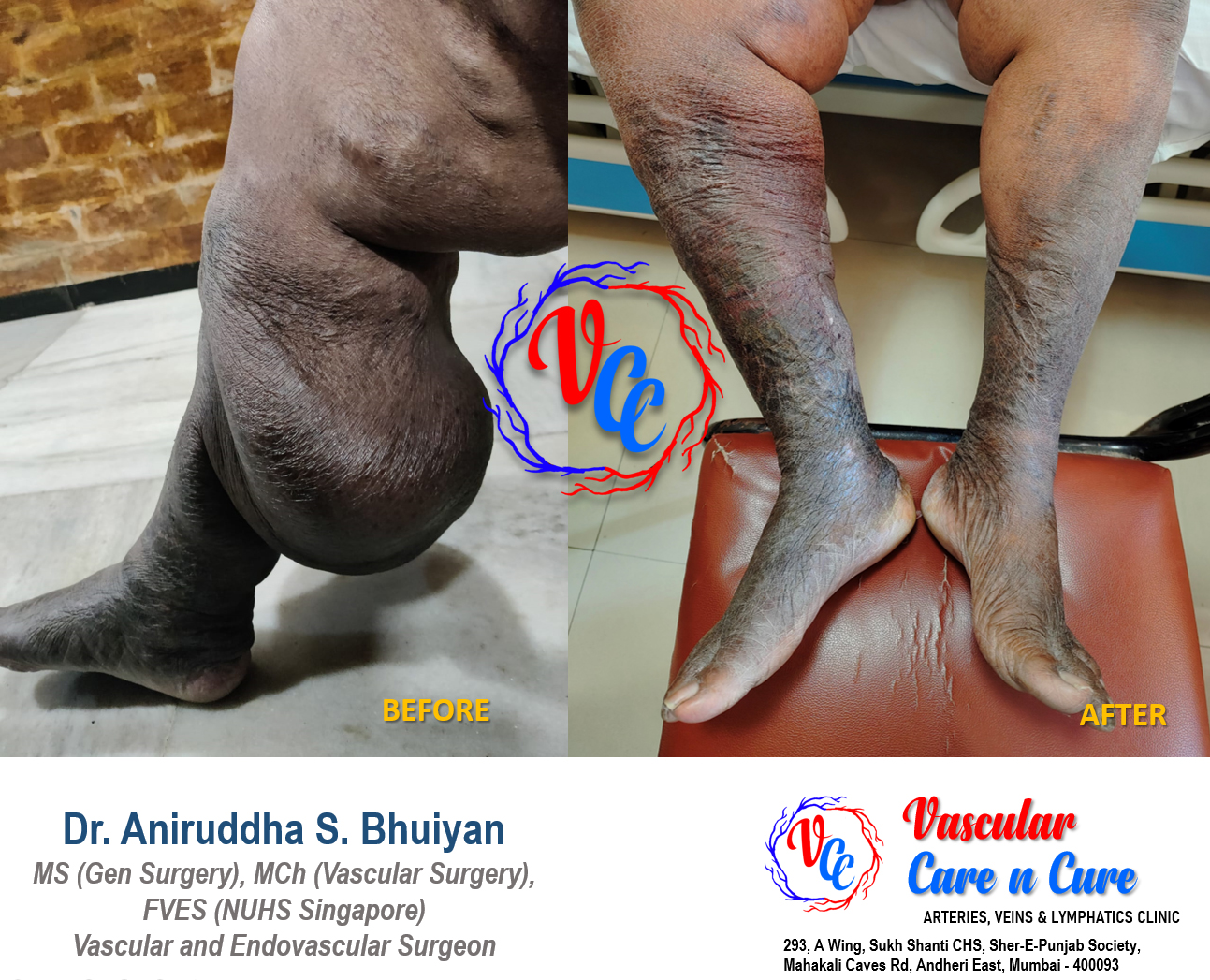
The patient shown here is a middle-aged man with a mass in his right calf that had grown slowly over 10 years. His job kept him on his feet, and his doctors advised long-term compression bandages and garments. When ulcers kept coming back at the base of the swelling, he looked for other opinions and came to us.
How lymph and vein problems are linked
The veins and the lymphatic vessels both drain fluid from the leg. When the veins fail for a long time, as in chronic venous insufficiency or after a deep vein thrombosis, more fluid leaks into the tissues than the lymphatic vessels can carry away. In time this overload damages the lymphatic vessels as well. Doctors call this combined problem phlebolymphedema. The leg becomes swollen and heavy, the skin thickens, and ulcers and skin infections (cellulitis) become more common.
Signs of lymphovenous disorders
- swelling of one or both legs that does not go down overnight
- skin around the ankle that is thick, hard or darker than before
- a fold of skin at the base of the second toe that you cannot pinch up (Stemmer sign)
- repeated attacks of cellulitis
- wounds on the leg that keep coming back
Tests for lymphovenous disorders
A venous Doppler ultrasound shows whether the veins are leaking or blocked. If the doctor suspects lymphatic disease, lymphoscintigraphy, a scan that follows a small injected tracer, shows how well the lymphatic vessels drain.
Treatment of lymphovenous disorders
Treatment starts with the cause. Laser, radiofrequency or glue can close faulty superficial veins, and a stent can sometimes open a blocked deep vein. Complex decongestive therapy controls the swelling: compression bandaging, manual lymphatic drainage, skin care and exercise, followed by fitted compression garments. Our lymphedema page explains these treatments in more detail.
When large folds of hardened tissue keep breaking down into ulcers, as in the patient described above, surgery to remove the excess tissue can give back a leg that is easier to care for.
If you have one of these lymphovenous disorders, please see a vascular & endovascular surgeon.
Frequently asked questions
Can lymphedema be cured?
Usually it cannot be cured, but it can be controlled well with compression, skin care and, for selected patients, surgery.
Does compression help lymphovenous swelling?
Yes. Compression is the main treatment, but the cause, such as faulty or blocked veins, also needs to be found and treated.
For leg swelling, recurring cellulitis or a leg wound that keeps coming back, call +91 77383 27001 or book an appointment with Dr. Aniruddha Bhuiyan at Vascular Care n Cure Clinic, Andheri East, Mumbai.