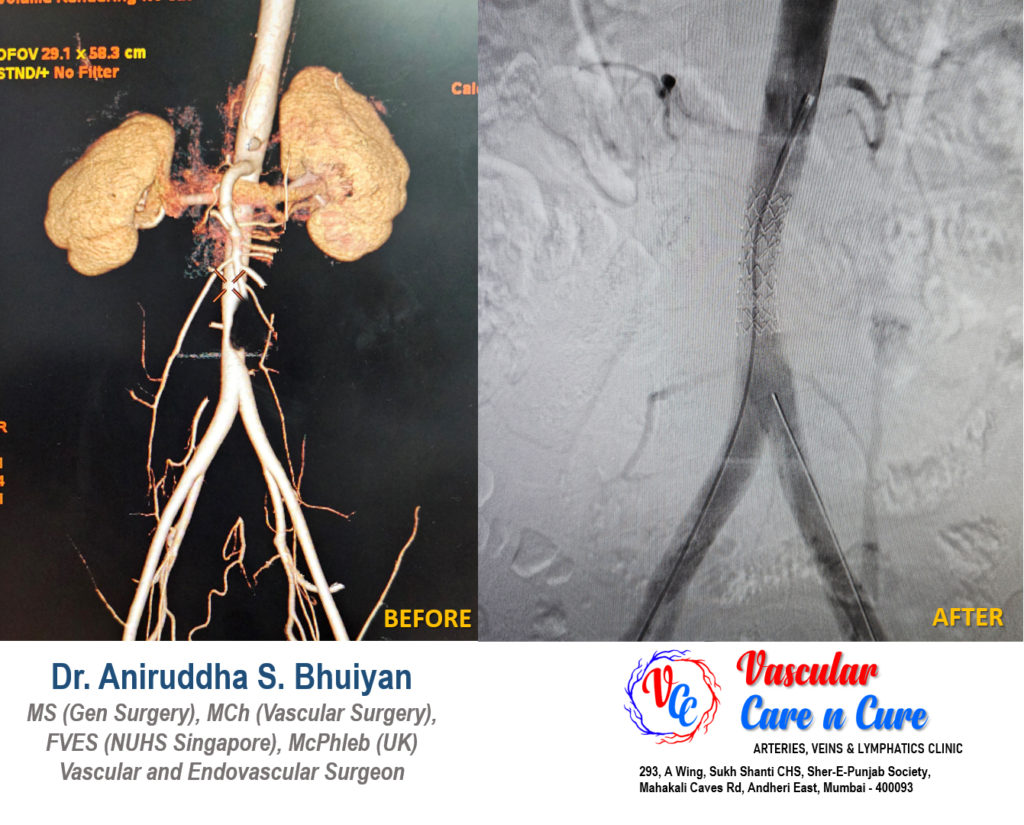
Infra-renal aortic stenosis is a narrowing of the aorta, the main artery in the abdomen, below the level of the kidneys. The aorta carries oxygen-rich blood from the heart to the lower body. It narrows when plaque or calcium builds up in its wall, which slows the flow of blood. Left untreated, it can lead to reduced blood flow to the legs or gangrene. Aortic stenting is a common way to open the narrowing.
During aortic stenting, the surgeon places a thin, expandable metal tube called a stent in the narrowed section of the aorta. The stent acts as a scaffold. It widens the artery and restores blood flow to the lower body. Compared with open surgery, this minimally invasive approach means a shorter hospital stay, quicker recovery and lower risk for patients who are not fit for a major operation.
Where else do surgeons use stents outside the heart?
Stents work in many arteries besides the coronary arteries of the heart. Vascular surgeons place them in the aorta and in the iliac arteries of the abdomen and pelvis. They also use them in the leg arteries, the carotid arteries in the neck, the kidney arteries and large veins. In each place the aim is the same: to hold a narrowed or blocked vessel open so blood flows freely.
Symptoms of a narrowed aorta
A narrowing of the aorta below the kidneys, or of the iliac arteries just beyond it, reduces blood flow to both legs. The commonest symptom is claudication: pain or cramping in the buttocks, thighs or calves on walking that settles with rest. Men may also have difficulty with erections. In severe cases there is pain at rest, or wounds on the feet that do not heal. Our page on leg artery blockages describes these symptoms in more detail.
How the surgeon performs aortic stenting
The surgeon works through a needle puncture in the groin, sometimes in both groins. Under X-ray guidance, the surgeon passes a thin wire across the narrowing. The surgeon then places a stent across the narrowed segment and expands it to the normal width of the aorta. If the narrowing extends into both iliac arteries, the surgeon places two stents side by side where the aorta divides. Surgeons call this technique kissing stents. Most patients are up and walking the next day.
How well does aortic stenting work?
Results for a short narrowing of the aorta are good. A Hungarian series followed 40 patients treated between 2001 and 2017. At two years 97% of stented aortas were still open, and at five years 88%. One patient had a tear of the aorta during the procedure that needed open surgery. A UK series followed 22 patients for more than seven years on average. Symptoms came back in four of them, and a repeat balloon procedure treated all four successfully.
Open surgery, such as an aorto-bifemoral bypass, is still the better choice in some cases. These include long blockages, a very heavily calcified aorta and failed stenting.
After aortic stenting
- Take your blood thinners and statin exactly as prescribed.
- Stop smoking completely, because smoking is the main reason these arteries narrow again.
- Walk every day, building up the distance gradually.
- Attend follow-up visits with a Doppler scan to check the stent.
Frequently asked questions
Is aortic stenting a major operation?
No. It needs no large cut. The surgeon works through a needle puncture in the groin, and most people go home within a day or two.
How long does an aortic stent last?
In published series, most stented aortas stay open for many years. If a narrowing comes back, a repeat balloon procedure can usually treat it.
For pain in the legs on walking or an opinion on aortic stenting, call +91 77383 27001 or book an appointment with Dr. Aniruddha Bhuiyan at Vascular Care n Cure Clinic, Andheri East, Mumbai.